Understanding Nix
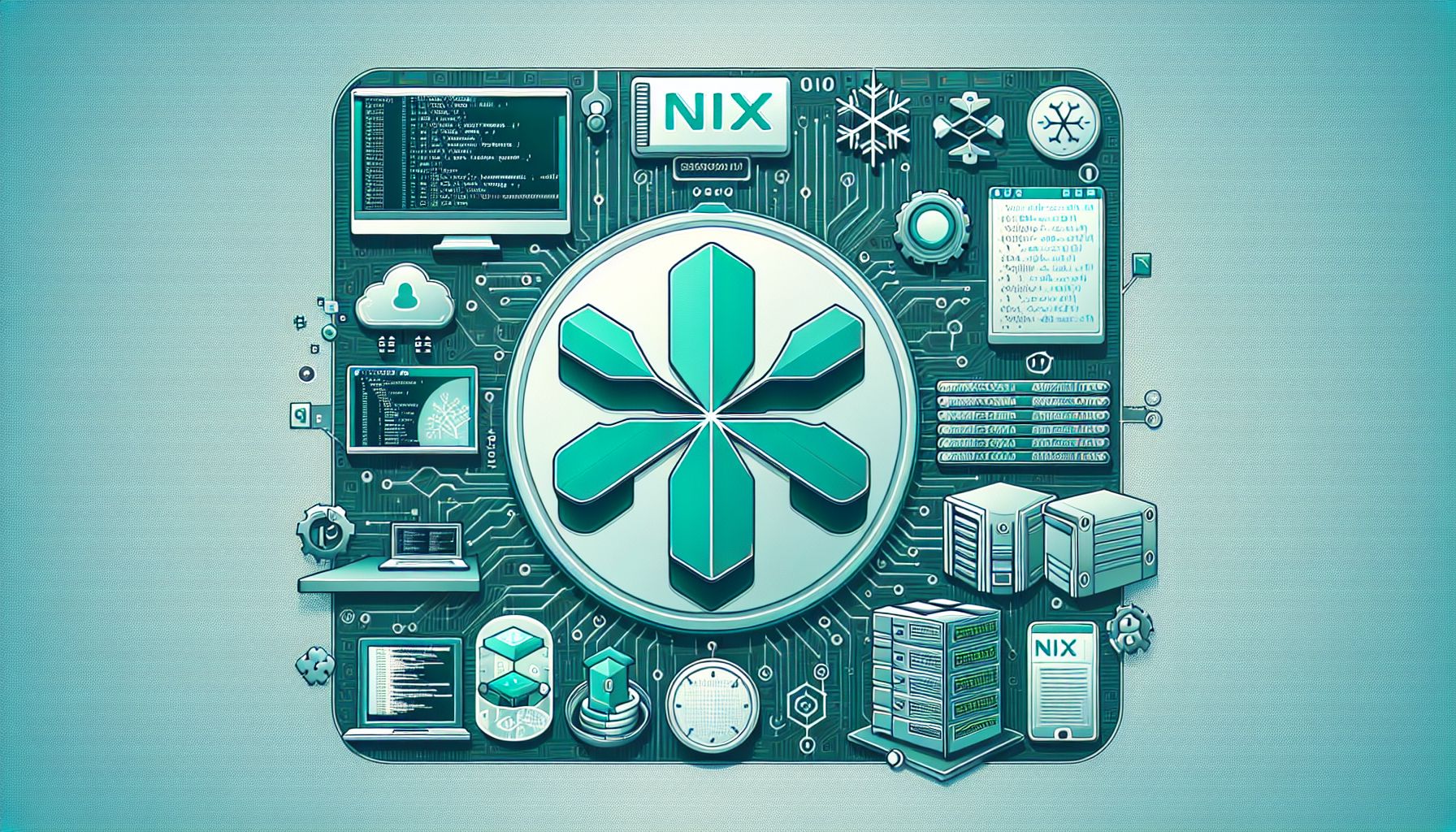
Nix is a unique package management system that supports Linux and MacOS. It became public in 2004 after Eelco Dolstra developed it as part of his Ph.D. research in Utrecht University. What separates Nix from traditional package managers is its focus on producing repeatable and reliably consistent results. It achieves these results by utilizing version-controlled, isolated, and atomic operations.
Nix organizes packages by hashing them into an immutable store, differentiating each build output. At compile time, dependencies are confirmed by establishing absolute references to the required packages. This process ensures that every software component will only interact with declared and approved versions. This operation eliminates compatibility problems prevalent with traditional package managers.
The Principles of Nix
Nix follows certain principles that have aided in its popularity among developers. First is the principle of isolation: the management system guarantees an operation will not interfere with others. Secondly, Nix follows atomicity, ensuring every action is either completely performed or not done at all, leading to consistent system states. It also ensures reproducibility – that is, creating similar environments across various machines, and the principle of user-friendliness, allowing non-root users to install applications.
Unpacking NixOS
Echoing Nix’s philosophy, NixOS is a Linux distribution that leans heavily on the principles upheld by the Nix management system. NixOS uses a configuration file composed in the Nix language to manage all system aspects. It allows users to define packages, file systems, users, and even services in a coordinated manner. This usage avoids the fragmented management standard to most distributions.
What Makes NixOS Unique
The comparative uniqueness of NixOS stems from the atomicity its constructs follow. NixOS promotes an atomic upgrade or rollback model, enabling changes to be fully implemented or none at all. This principle eradicates the potential breaking of the system from partial upgrades. Each build runs independently, avoiding conflicts, and the user can test different versions risk-free.
Moreover, NixOS brings a distinctive reproducibility factor. By committing the entire system configuration to a single file, users can ensure uniformity across multiple systems. The advantage of this model is twofold: not only does it streamline the setup of new devices or recovery of broken systems, but it also aids in debugging.
Finally, the systematic organization offers a welcome relief from the clutter and fragmentation of traditional Linux distributions. This holistic approach provides an effective solution to the control and management complexities faced by administrators.
Pros and Cons of Nix and NixOS
Advantages
Nix and NixOS offer numerous benefits, particularly for developers and system administrators. The key advantages include management of package dependencies and versions, reproducibility across systems, and atomic upgrades and rollbacks. Also, users can experiment with packages without fear of breaking the system due to the isolated environments offered by Nix.
Disadvantages
The primary drawback of Nix and NixOS is the steep learning curve associated with understanding the Nix language and the system as a whole. Finding specific packages may also present a challenge since the isolation of dependencies could lead to software taking more space on disk. Additionally, the installation process is perceived as complex and intimidating to newcomers.
However, the comprehensive Nix manual provides clear instructions on navigating all elements of Nix and NixOS.
Conclusion
Nix and NixOS represent a significant departure from traditional package managers and Linux distributions, providing compelling benefits for developers and system administrators. While it might present some initial challenges due to its unique approach and language, its advantages make it worthwhile for users intent on maintaining efficiency and reliability in their package management and system administration tasks.
Further Reading
To gain more insights into Nix and NixOS, refer to the Nix manual, the NixOS manual, or this tutorial from useful.dev, each providing a wealth of valuable information and insights.